
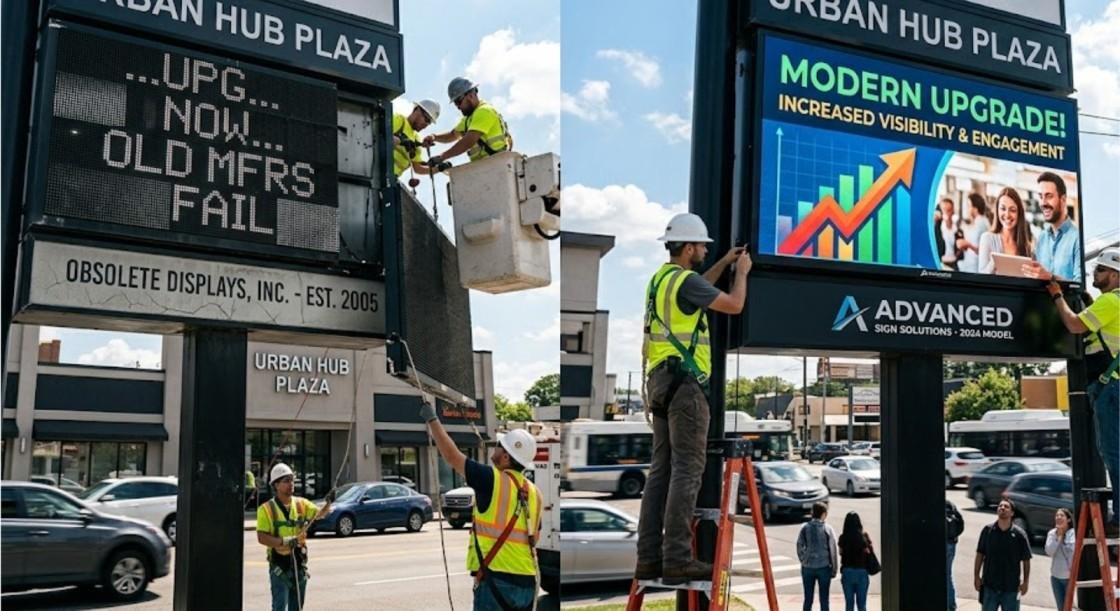

In the fast-paced commercial environment of 2026, capturing the attention of passing motorists and foot traffic requires highly dynamic, instantly engaging communication. Static storefront signs still serve an important architectural purpose, but businesses that need to display real-time promotions, community announcements, or fluctuating daily specials rely heavily on Electronic Message Centers (EMCs). An EMC acts as a tireless, 24/7 digital marketer stationed directly at your curb.
However, digital signage hardware and programming software are advancing at a lightning-fast pace. If your outdoor digital display was installed several years ago, it may be secretly undermining your brand authority. Dim screens, burnt-out modules, and clunky, outdated messaging interfaces signal to potential customers that your business is falling behind.
When the time comes to modernize your display, sourcing your hardware from the right partner is critical. Siding with experienced electronic message center manufacturers specializes in customized signs that reflect your business’s personality while enhancing street presence and customer trust. If you are wondering whether your current digital board is due for a replacement, here are the top signs that it is officially time to upgrade your system.
1. Visual Degradation: Dead Pixels and Fading Brightness
The most urgent indicator that your EMC needs an upgrade is visible physical deterioration. Outdoor digital signs face brutal environmental conditions, enduring scorching summer UV rays, freezing winter ice, and heavy downpours. Over time, these elements take a toll on older LED technology.
- The “Patchwork” Effect: As individual LED diodes fail or entire module blocks burn out, your display develops dark squares and unreadable text. Sourcing replacement parts for legacy boards can be incredibly difficult and expensive.
- Fading Luminance: Older LED displays gradually lose their brightness over their operational lifespan. If your sign looks brilliant at night but appears washed out and illegible under direct afternoon sunlight, the hardware has lost its crucial contrast ratios. Modern EMCs utilize advanced, high-intensity diodes engineered to cut through glare and maintain vibrant, uniform color consistency for over a decade.
2. The Shift to High-Resolution Pixel Pitch
Digital graphics standards have evolved dramatically. A decade ago, businesses were perfectly content with displays featuring wide pixel pitches (the physical distance in millimeters between each individual LED cluster). Older signs often featured pixel pitches of 16mm, 20mm, or even wider, which resulted in highly pixelated, blocky text and simplistic graphics.
Today’s consumers are accustomed to the ultra-sharp, high-fidelity screens on their smartphones and home televisions. To display modern brand assets, clean typography, and full-color photo or video animations without distortion, upgrading to a tighter pixel pitch is essential.
| Sign Generation | Typical Pixel Pitch | Visual Fidelity & Capability |
|---|---|---|
| Legacy EMCs (Pre-2018) | 16mm to 25mm | Basic scrolling text, low-resolution monochrome or simple color graphics. Best viewed from long highway distances. |
| Modern EMCs (2026 Standards) | 6mm to 10mm | Crisp, high-definition full-color images, smooth video playback, and highly readable text suitable for both close pedestrian viewing and standard street traffic. |
Export to Sheets
3. Outdated Software and Frustrating Connectivity
An electronic message center is only as useful as the software used to control it. If updating your outdoor sign requires an employee to walk outside with a USB thumb drive, connect to an unstable local radio frequency, or struggle with clunky legacy software built for obsolete operating systems, your communication workflow is broken.
The Cloud Advantage: Modern digital sign manufacturers integrate seamless, secure cloud-based software systems. This allows business owners and marketing managers to update messages, schedule complex campaign calendars, and monitor hardware health instantly from any web browser or smartphone, regardless of where they are located.
4. Skyrocketing Energy Costs and Ongoing Maintenance
Maintaining an obsolete electronic display often becomes a severe financial drain. Older hardware generations run hot, require heavy internal cooling fans, and draw massive loads of electricity to stay illuminated. Furthermore, paying a sign technician to repeatedly drive out, open the cabinet, and solder old wiring or swap out failing power supplies quickly erodes your operating budget.
Upgrading to a state-of-the-art EMC provides an immediate return on investment through superior engineering. Modern LED modules consume a mere fraction of the power utilized by legacy systems while generating significantly less internal heat. By investing in a new display backed by a robust manufacturer warranty, you completely eliminate the stress of unpredictable repair bills and instantly reduce your monthly utility overhead.
5. Strict Municipal Code Compliance and Dimming Capabilities
Zoning laws governing digital signage are becoming increasingly strict across municipalities nationwide. Many cities and local townships have updated their commercial sign codes to combat light pollution and driver distraction.
Older displays often lack the sophisticated internal sensors required to adjust their brightness automatically based on ambient lighting conditions. If your sign blasts daytime-level brightness into the street at two in the morning, you risk facing expensive municipal fines or neighbor complaints. Modern EMC units feature highly precise, integrated photocell sensors that automatically dim the display at dusk, ensuring your signage remains fully compliant with localized brightness limits while maintaining perfect aesthetic appeal.
Conclusion
Your exterior signage is the ultimate physical reflection of your brand’s quality, stability, and modern relevance. Allowing an outdated, malfunctioning digital board to represent your company actively turns qualified leads away. By upgrading to a high-resolution, energy-efficient display powered by intuitive cloud software, you transform your storefront into a highly captivating communications asset. Sourcing your new system directly from dedicated electronic message center manufacturers ensures your investment is built with commercial-grade durability, customized to fit your exact architectural requirements, and backed by long-term structural support.
Frequently Asked Questions (FAQ)
Q: What is the realistic operational lifespan of a modern commercial Electronic Message Center?
A: High-quality, commercial-grade EMCs manufactured with top-tier LED diodes are typically rated for approximately 100,000 hours of continuous usage. With routine maintenance and proper automated brightness management, a new digital sign will reliably serve your business for 10 to 12 years before experiencing noticeable visual degradation.
Q: Do I need to apply for a brand-new city permit if I am simply replacing an old digital sign cabinet with a new one?
A: In most municipalities, yes. Even if you are utilizing the existing steel pylon pole or masonry monument base, swapping out the digital display cabinet generally triggers a permit review to ensure the new hardware complies with current electrical codes and updated digital zoning ordinances. Siding with a full-service sign company guarantees this paperwork is handled professionally on your behalf.
Q: Can a modern EMC display full-motion video, or is it limited to changing static images?
A: Advanced digital boards with tight pixel pitches (such as 6mm or 8mm) are fully capable of displaying smooth, high-frame-rate video animations. However, you must verify your local municipal sign codes first; many cities restrict commercial street signs to static images that hold for a specific duration (e.g., 8 seconds) to prevent driver distraction.