
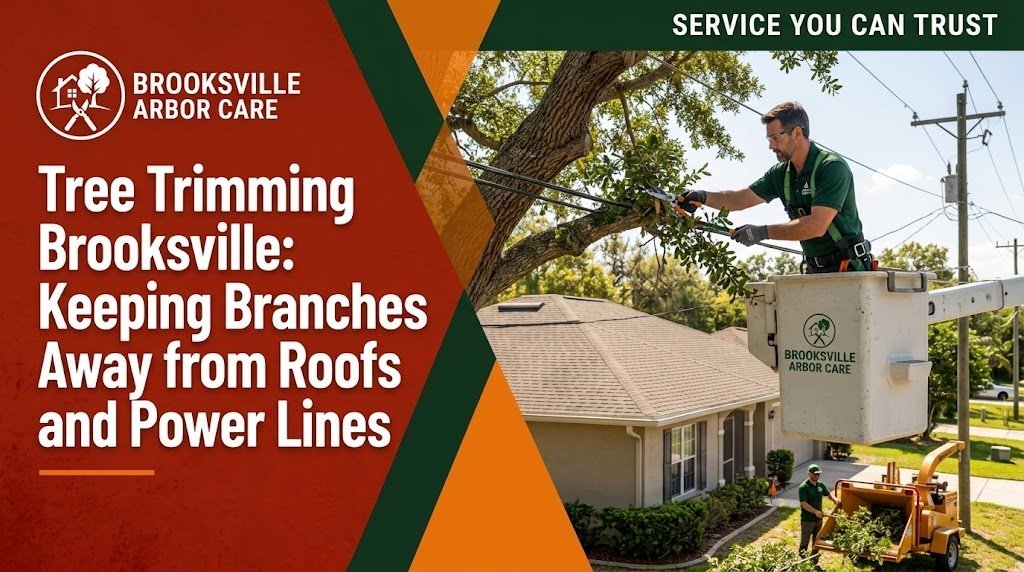

Trees add beauty, shade, and value to residential and commercial properties. However, when branches grow too close to roofs, gutters, driveways, fences, or power lines, they can become a serious maintenance and safety concern. Regular trimming helps keep trees healthy while reducing the risks associated with overgrown limbs.
In Brooksville, Florida, trees can experience rapid growth because of the warm climate and long growing season. Without routine maintenance, branches may eventually interfere with structures, utility lines, and outdoor spaces. Professional tree care can help property owners address these concerns before they result in costly repairs or hazardous conditions.
Why Tree Trimming Matters
Tree trimming is more than simply cutting away branches that look untidy. Proper trimming helps control growth, remove damaged limbs, improve air circulation, and maintain a safe distance between trees and nearby structures.
Branches that extend over a roof can scrape against shingles during windy weather. They may also drop leaves, twigs, and other debris into gutters, contributing to blockages and drainage problems. Large branches can cause even more significant damage if they break during storms.
Power lines present another important concern. Branches that grow into or too close to electrical lines can create dangerous conditions, especially during storms. Tree trimming near utility lines should always be handled carefully and, when necessary, by qualified professionals who understand the associated safety requirements.
Tree Trimming Brooksville Helps Prevent Property Damage
Tree trimming Brooksville helps manage overgrown branches near roofs, gutters, driveways, fences, and utility areas before they cause damage.
Keeping branches properly maintained can reduce the chance of limbs falling onto buildings, vehicles, fences, or outdoor equipment. It can also help prevent branches from rubbing against roofs and siding, which may gradually cause wear.
Regular trimming also makes it easier to identify potential tree problems. Dead branches, weak attachments, cracks, cavities, and signs of disease can become more noticeable during professional inspections. Addressing these issues early may prevent a small concern from becoming a major hazard.
Keeping Branches Away From Roofs
Branches hanging over a roof can create several problems. During windy conditions, limbs may repeatedly strike roofing materials, causing damage over time. Falling branches can also break shingles or damage gutters and downspouts.
Trees should be assessed before branches become heavily intertwined with a structure. Professional trimming can selectively remove problematic limbs while preserving the tree’s natural shape and health.
Property owners should avoid excessive cutting simply to create more space. Removing too many branches at once can stress a tree and may encourage weak or rapid regrowth. A knowledgeable tree care professional can determine which branches should be removed and where cuts should be made.
Managing Trees Near Power Lines
Trees growing near electrical lines require special attention. A branch contacting a power line can create a serious electrical hazard. Storms can increase the danger by causing branches to move, break, or fall onto utility infrastructure.
Homeowners should never attempt to cut branches that are touching or growing immediately around power lines. Electrical hazards can be difficult to recognize, and even branches that appear safe may conduct electricity under certain conditions.
If a tree is growing too close to utility lines, contact the appropriate utility provider or a qualified tree care professional. Depending on the situation, specialized equipment and procedures may be necessary.
Signs Your Trees Need Trimming
Knowing when to schedule tree maintenance can help property owners stay ahead of potential problems. Common signs include:
Overhanging Branches
Branches extending over roofs, garages, driveways, or walkways may need attention before they become damaged or interfere with daily activities.
Dead or Broken Limbs
Dead branches are more likely to fall, particularly during strong winds or storms. Removing them can reduce unnecessary hazards.
Branches Near Utility Lines
Trees growing toward electrical or communication lines should be monitored carefully. Professional assessment is recommended when branches approach utility infrastructure.
Excessive Growth
Dense or crowded branches can reduce airflow and sunlight within the canopy. Selective trimming can improve the structure of the tree while maintaining its appearance.
Benefits of Professional Tree Trimming
Professional tree trimming offers several advantages. Experienced tree professionals understand how different species respond to pruning and can identify branches that are weak, damaged, or poorly positioned.
Proper trimming can also improve the overall appearance of a property. A well-maintained canopy can make landscaping look cleaner and more organized while allowing trees to remain an attractive part of the landscape.
Safety is another major benefit. Working near roofs, tall trees, and utility lines can involve significant risks. Professionals have the equipment and experience needed to handle many difficult trimming situations more safely.
How Often Should Trees Be Trimmed?
There is no single trimming schedule that works for every tree. Species, age, location, growth rate, health, and surrounding structures all affect how frequently maintenance is needed.
Some trees may benefit from annual inspections, while others may require trimming every few years. Trees located close to homes or power lines should be monitored more frequently because even moderate growth can create clearance problems.
Scheduling an inspection before storm season can also help identify weak or potentially hazardous branches.
FAQs
How do I know if branches are too close to my roof?
Branches that touch the roof, scrape against roofing materials, hang heavily over gutters, or could fall onto the structure during a storm should be evaluated by a professional.
Can I trim branches near power lines myself?
No. Cutting branches near electrical lines can be extremely dangerous. Contact your utility provider or a qualified tree care professional for appropriate assistance.
Does trimming hurt a tree?
Proper pruning generally supports tree health when performed correctly. However, excessive or improper cutting can stress a tree and create opportunities for disease or decay.
What is the best time to trim trees?
The ideal timing depends on the tree species and the reason for pruning. A professional can recommend an appropriate schedule based on local growing conditions and the tree’s health.
Should I trim trees before hurricane or storm season?
An inspection before severe weather can help identify dead, broken, or structurally weak branches. Removing appropriate hazards in advance may reduce the potential for storm-related damage.
Conclusion
Keeping tree branches away from roofs and power lines is an important part of responsible property maintenance. Regular trimming can reduce the risk of falling limbs, roof damage, blocked gutters, and utility conflicts while helping trees maintain healthy growth.
For Brooksville property owners, proactive tree care is often better than waiting until an overgrown branch creates an emergency. Regular inspections and professional trimming can keep trees attractive, functional, and safer around homes, businesses, and utility areas.