
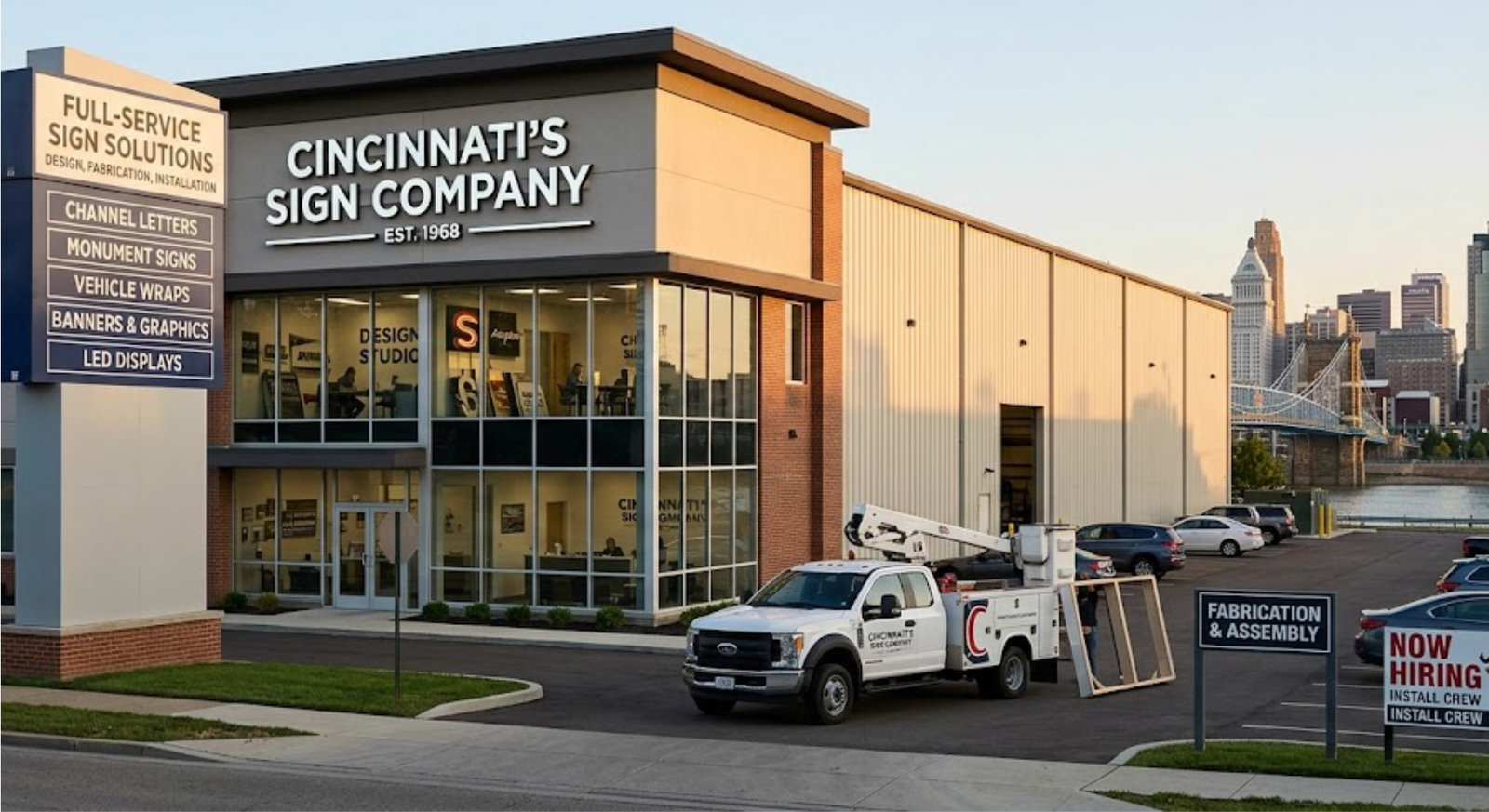

In today’s fast-paced commercial environment, your physical storefront serves as the primary visual representative of your brand. Across Greater Cincinnati from vibrant retail centers in Over-the-Rhine and Hyde Park to bustling suburban hubs in Kenwood, Mason, and Florence a business’s exterior and interior signage works 24/7 to capture attention, build trust, and drive customer traffic.
Navigating the journey from an initial logo concept to a fully installed, illuminated sign requires balancing graphic design, material engineering, electrical safety, and local zoning laws. Attempting to manage this process with unverified online vendors often leads to premature material fading, poor night visibility, or unexpected municipal fines.
Working with an established, full-service local partner eliminates this friction. From design to installation, cincinnati sign company guides clients through every step to ensure signage that commands attention and complies with code.
Here is a comprehensive breakdown of the top commercial uses for a full-service Cincinnati Sign Company and how professional signage elevates local businesses across the tri-state area.
1. Dimensional Exterior Storefront and Building Signage
Retail storefronts, restaurants, and service providers rely heavily on making an immediate, high-contrast visual impression on passing motorists and pedestrians. Exterior building signs establish your physical presence and communicate brand quality long before a customer enters your building.
[ High-Contrast Exterior Signage ] ──► Maximum Street Visibility ──► Increased Daily Foot Traffic
Popular Storefront Sign Styles:
- Dimensional Channel Letters: Individually crafted 3D aluminum and acrylic letters outfitted with energy-efficient LED modules for crisp day and night legibility.
- Cabinet and Lightbox Signs: Durable aluminum enclosures with illuminated face panels, ideal for high-impact logo displays across commercial plazas.
- Halo-Lit (Reverse Channel) Signs: Sophisticated lettering that projects light backward onto the building facade, creating an elegant ambient silhouette glow.
2. Architectural Monument and Highway Pylon Signs
For commercial properties set back from major thoroughfares, corporate campuses, medical plazas, and educational facilities, wall-mounted building signs may not be visible to high-speed roadway traffic. Free-standing ground signs bridge this distance gap.
┌─────────────────────────────────────────────────────────────────────────────┐
│                    FREE-STANDING SIGNAGE FORMAT COMPARISON                  │
├──────────────────────────────┬──────────────────────────────────────────────┤
│ Signage Format               │ Primary Application & Visual Impact          │
├──────────────────────────────┼──────────────────────────────────────────────┤
│ **Architectural Monuments**  │ Low-profile masonry or stone structures that │
│                              │ blend seamlessly with surrounding landscape. │
├──────────────────────────────┼──────────────────────────────────────────────┤
│ **Elevated Pylon Signs**     │ Tall, steel-reinforced pole structures designed│
│                              │ to capture attention along highways (I-75/I-71).│
├──────────────────────────────┼──────────────────────────────────────────────┤
│ **Electronic Message Centers**│ Integrated digital LED screens allowing      │
│                              │ real-time promotional updates and alerts.    │
└──────────────────────────────┴──────────────────────────────────────────────┘
A professional sign manufacturer evaluates sightlines, vehicle speeds, and property setbacks to engineer ground signs that maximize readability and safety.
3. Interior Wayfinding, ADA Compliance, and Lobby Graphics
Signage extends far beyond outdoor building facades. Once customers, patients, or clients enter your facility, interior signage guides their movement, enforces safety standards, and reinforces corporate culture.
[ Brand Identity Entrance ] ──► Directional Wayfinding ──► ADA Compliant Suite Identification
- Lobby and Reception Displays: Dimensional acrylic, brushed metal, or back-lit logo features mounted behind reception desks to establish institutional authority.
- Wayfinding and Directional Systems: Clear, intuitive hallway signage directing visitors seamlessly toward elevators, suite numbers, and department centers.
- ADA-Compliant Tactile Signage: Precision-manufactured room identifiers featuring raised tactile lettering and Grade 2 Braille to meet federal accessibility requirements.
4. Vehicle Wraps and Mobile Fleet Graphics
For service businesses—such as plumbers, electricians, HVAC technicians, caterers, and delivery fleets—commercial vehicles represent mobile billboards that generate millions of local visual impressions annually.
| Marketing Channel | Coverage & Reach | Long-Term Cost Efficiency |
| Traditional Billboards | Fixed geographic location with recurring monthly rent. | Ongoing operational expense. |
| Digital PPC Ads | Highly targeted online clicks that stop when budget ends. | Continuous pay-per-lead cost. |
| Full Commercial Vehicle Wraps | High-impact mobile exposure wherever your fleet travels. | One-time investment lasting 5–7 years. |
Professional sign shops use cast vinyl films and UV-resistant overlaminates to ensure full-wrap graphics withstand automated car washes, road salt, and harsh weather.
5. Navigating Municipal Permits, Code Compliance, and Installation
The most challenging phase of any commercial sign project is navigating local government regulations. Municipal zoning codes across Hamilton County and surrounding jurisdictions strictly regulate sign square footage, height limits, illumination levels, and setback lines.
[ Site Survey & CAD Engineering ] ──► Municipal Permit Approval ──► Precision Crane Installation
A dedicated local sign partner manages the entire administrative and structural process:
- Permit Expediting: Submitting engineered CAD drawings and structural calculations directly to municipal zoning boards for fast approval.
- UL Certification: Ensuring all internal electrical wiring and LED power supplies meet Underwriters Laboratories safety standards.
- Licensed Installation: Utilizing specialized crane trucks and certified riggers to mount heavy signage securely against any substrate.
Conclusion
Partnering with an experienced, full-service sign company in Cincinnati is an investment in your business’s physical visibility and brand authority. By combining custom visual design with durable commercial fabrication, local code compliance, and expert installation, a professional sign team ensures your business commands attention around the clock.
Ready to transform your storefront visibility with custom-engineered commercial signage? Connect with the experts at Atlantic Sign Company to schedule your site evaluation and design consultation today.
Frequently Asked Questions (FAQ)
Q: How long does a typical commercial sign project take from design to installation?
A: Depending on sign complexity, custom fabrication needs, and municipal permit review schedules, most commercial sign projects take between 4 to 8 weeks from initial concept approval to final installation.
Q: Do I need a permit to replace or update an existing business sign in Cincinnati?
A: Yes. In most local tri-state municipalities, changing, refacing, or altering electrical components on an existing commercial sign frame requires a municipal permit to verify structural and zoning compliance.
Q: What are the benefits of upgrading old fluorescent sign lighting to LEDs?
A: Retrofitting older signs with modern LED modules reduces electrical power consumption by up to 80%, eliminates cold-weather flickering, and provides consistent, bright illumination with significantly longer operational lifespans.