
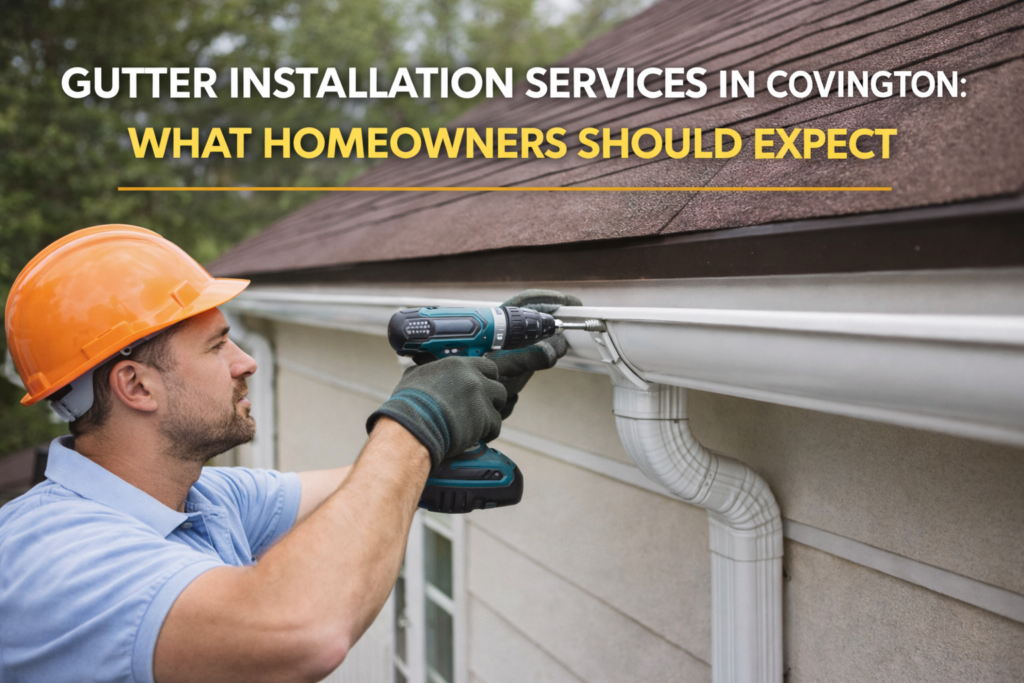
Gutter Installation Services in Covington: What Homeowners Should Expect
Why Gutters Are Essential for Every Home Gutters play a bigger role in protecting a home than many homeowners realize. While they may seem like a simple exterior feature, gutters help direct rainwater away from the roof, siding, foundation, and landscaping. Without a properly installed gutter system, water can collect in places where it should not, leading to erosion, staining, wood rot, basement moisture issues, and even structural damage over time. In Covington, where seasonal rain and changing weather can put stress on residential exteriors, a dependable gutter system is an important part of long-term home protection. For homeowners planning a gutter installation, it helps to understand the process, what choices are available, and what to expect from a professional contractor. What Happens During a Gutter Installation Project A professional gutter installation is not just about attaching channels along the roofline. It usually starts with a full assessment of the home’s drainage needs, roof shape, and current condition. Initial Inspection and Evaluation The first step is typically an on-site inspection. During this visit, the contractor examines: This evaluation helps determine the right type of gutter system for the property. It also helps identify any repairs that may need to happen before new gutters are installed. Accurate Measurements Proper measurements are critical for a successful installation. Contractors measure the roofline carefully to ensure the gutters fit correctly and guide water efficiently toward the downspouts. Many companies recommend seamless gutters because they are custom-cut to fit the home and have fewer joints, which means fewer places for leaks to develop. Types of Gutters Homeowners May Choose Not all gutters are the same. Homeowners in Covington may be asked to choose from several material and style options depending on budget, maintenance preferences, and curb appeal goals. Common Gutter Materials Aluminum Gutters Aluminum is one of the most common choices because it is lightweight, rust-resistant, and available in many colors. It is durable enough for most homes and tends to offer a good balance of performance and cost. Vinyl Gutters Vinyl is often a budget-friendly option. It is easy to install and resistant to rust, but it may not hold up as well in extreme weather or over long periods. Steel Gutters Steel is strong and can handle heavy weather conditions, but it may require more maintenance to prevent rust over time. Copper Gutters Copper provides a premium appearance and long life. It is often chosen for upscale homes or historic properties, though it comes at a higher price. Seamless vs. Sectional Gutters Seamless gutters are often preferred because they are made in longer custom-cut sections. This reduces the number of joints and lowers the risk of leaks. Sectional gutters come in pre-cut pieces and may cost less upfront, but they usually require more maintenance over time. The Installation Process Step by Step Once the system is selected and scheduled, the installation itself usually follows a straightforward process. Removal of Existing Gutters If the home already has gutters, the old system will need to be removed first. During removal, the contractor may uncover hidden damage to the fascia boards or roof edge. If wood rot or structural issues are found, those repairs should be completed before new gutters are installed. Mounting the New Gutters The contractor installs the new gutters with the correct slope so water can flow smoothly toward the downspouts. Even a slight mistake in pitch can cause standing water, overflow, or drainage failure. The system must be mounted securely so it can handle heavy rain and seasonal wear. Downspout Placement Downspouts are positioned to direct water away from the home as effectively as possible. The number and location of downspouts depend on the roof layout and how much water needs to be managed. Extensions or splash blocks may also be added to improve drainage away from the foundation. Final Testing and Cleanup After installation, the contractor should inspect the completed system, test water flow when possible, and clean up any debris left from the project. A professional team should leave the property neat and the system ready to perform. What Homeowners Should Ask Before Hiring a Contractor Choosing the right installer matters just as much as choosing the right gutter material. Homeowners should ask a few key questions before making a decision. Important Questions to Ask Are You Licensed and Insured? This helps protect the homeowner if accidents or property damage occur during the project. Do You Offer Seamless Gutters? Seamless systems are often a better long-term investment because they reduce leak risk. Will You Inspect the Fascia and Roof Edge? A proper installation depends on the condition of the surface behind the gutters. What Warranty Do You Provide? A quality contractor should explain both product coverage and workmanship warranty details. Is Cleanup Included? Always confirm whether removal of old gutters and project cleanup are part of the quoted price. Signs It May Be Time for New Gutters Some homeowners wait until damage becomes obvious before replacing their gutters. However, several warning signs suggest that a new installation may be needed sooner rather than later. Common Signs of Gutter Failure When these problems are ignored, they can eventually lead to more expensive exterior and structural repairs. Why Professional Installation Makes a Difference Some homeowners consider gutter installation a do-it-yourself project, but professional installation often delivers better performance and fewer long-term issues. A trained contractor understands how to set the correct pitch, secure the system properly, and place downspouts in the most effective locations. Northern Kentucky Roofing has built a reputation for reliability by helping homeowners safeguard their properties year-round. From leak detection to full replacements, the team brings local knowledge and proven expertise to every project. That kind of experience matters because a gutter system must do more than look good. It has to protect the home during heavy rain, seasonal storms, and changing weather conditions. A well-installed system can help reduce maintenance, improve drainage, and support the long-term condition of the roof and foundation. Additional Features Homeowners May Consider