
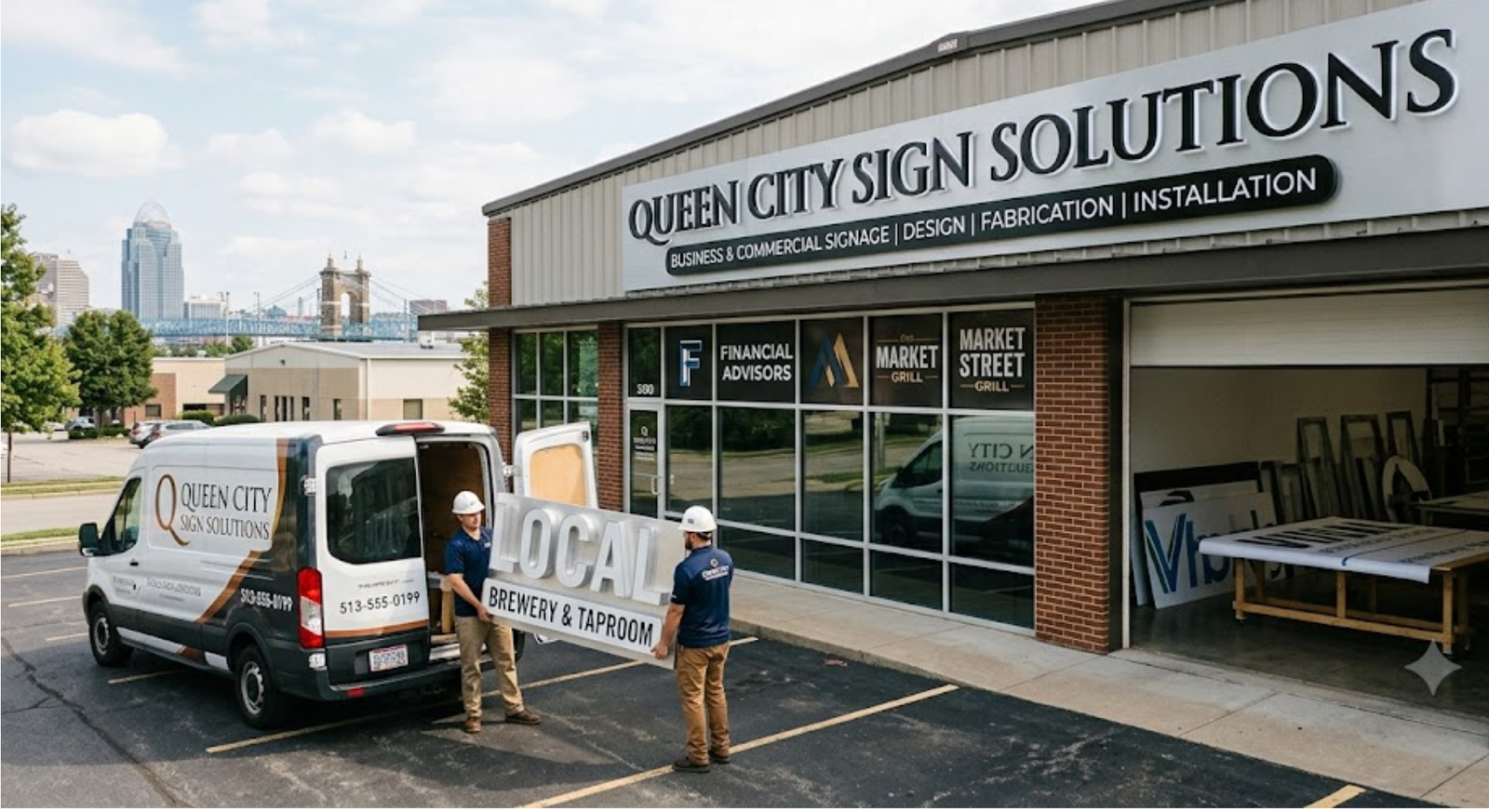

In today’s competitive brick-and-mortar landscape, capturing customer attention is one of the most critical challenges facing local businesses. Whether operating a boutique retail store in Over-the-Rhine, a corporate facility along I-75, or a neighborhood medical practice in Blue Ash, physical presence serves as the primary touchpoint for local traffic. A business’s exterior presentation communicates its values, professionalism, and reliability before a customer ever steps inside.
To stand out in high-density corridors, organizations rely on comprehensive visual branding strategies. Partnering with a specialized Sign Company Cincinnati enables companies to design, fabricate, and install tailored visual displays. Custom signage reflects a business’s unique personality while significantly enhancing street presence, driving impulse visits, and building long-term customer trust.
1. Establishing High-Impact Exterior Brand Identification
Exterior signage functions as a continuous, 24/7 advertisement for physical locations. Unlike digital media campaigns that require ongoing ad spend, an on-site building sign is a permanent capital asset that generates millions of vehicular and pedestrian impressions annually.
Cincinnati businesses utilize several distinct architectural sign types to establish primary brand identification:
- Channel Letter Signs: Individually crafted, three-dimensional letters mounted directly to building facades. These signs can be front-lit, halo-lit (backlit), or combination-lit using energy-efficient LEDs, ensuring high visibility during day and night hours.
- Monument Signs: Freestanding ground-level structures often built with masonry, brick, stone, or finished aluminum. Placed near property entrances, monument signs project stability, permanence, and corporate prestige.
- Pylon Signs: Elevated, high-rise freestanding structures designed to capture high-speed traffic along major highways and arterial roads. Pylon signs are particularly effective for multi-tenant retail centers, auto dealerships, and highway-adjacent commercial plazas.
- Architectural Blade Signs: Double-sided signs mounted perpendicular to building walls, catching the eyes of pedestrians walking along urban sidewalks in shopping and dining districts.
2. Navigating Local Permitting and Municipal Zoning
Installing commercial signage in Greater Cincinnati involves navigating strict municipal regulations, township zoning resolution boards, and historical architectural guidelines. Each district from the City of Cincinnati to suburban townships across Hamilton, Butler, and Warren counties enforces specific codes regarding allowable square footage, height restrictions, illumination nit levels, setback lines, and structural wind-load requirements.
Attempting a sign project without local expertise can lead to rejected applications, costly structural retrofits, or municipal fines. A full-service local sign contractor manages the complete administrative process:
[ Site Assessment & Field Survey ] ──► [ Engineering & Scaled Renderings ] ──► [ Municipal Permit Filing ] ──► [ Precision Fabrication & Installation ]
Local sign professionals conduct comprehensive site surveys, draft stamped engineering drawings, submit variance applications, and secure all necessary electrical and building permits prior to manufacturing.
3. Dynamic Messaging with Electronic Message Centers (EMCs)
As customer promotion cycles accelerate, traditional static reader boards are increasingly being replaced by high-resolution Electronic Message Centers (EMCs). These digital LED displays allow businesses to update content instantly via cloud-based software.
[ Cloud Management Portal ]
             │
             ▼
[ Secure Wireless Data Stream ]
             │
             ▼
[ On-Site Electronic Message Center ]
             │
             ├──> Morning: Timely Service & Product Offerings
             ├──> Afternoon: Flash Promotional Discounts
             └──> Evening: Community Messages & Event Announcements
Retailers, educational institutions, religious organizations, and civic centers utilize EMCs to display real-time announcements, weather alerts, time-sensitive promotions, and dynamic video content. This flexibility helps businesses adapt instantly to changing inventory or seasonal demands without recurring printing or labor costs.
4. Interior Architectural Signage and Wayfinding
While exterior signs draw customers through the door, interior environmental graphics guide their experience once inside. A cohesive interior signage package reinforces brand identity while improving operational efficiency and compliance.
- Dimensional Lobby Logos: Custom-cut acrylic, brushed metal, or high-density foam lettering installed in reception areas to establish a refined brand atmosphere.
- Wayfinding and Directional Systems: Clear, intuitive interior signage that helps visitors navigate multi-story office buildings, healthcare facilities, and educational campuses.
- ADA-Compliant Room Identification: Tactile lettering, Braille indicators, and high-contrast finishes required by federal regulations to ensure accessible navigation for visually impaired individuals.
Structural Comparison: Common Commercial Sign Formats
| Sign Type | Primary Application | Best Suited For | Key Operational Advantage |
| Channel Letters | Building Facade | Retail storefronts, corporate offices | High-impact 3D lighting options (Face-lit/Halo). |
| Monument Signs | Street Entrance | Corporate campuses, medical centers, schools | Projects permanence, stability, and high-end curb appeal. |
| Pylon Displays | Roadway Corridor | Shopping centers, interstate-adjacent hubs | High-elevation visibility targeting fast-moving traffic. |
| Digital EMCs | Integrated Base | Schools, auto dealers, retail plazas | Instant, scheduleable real-time message changes. |
5. Engineering for Durability in the Ohio Valley Climate
Commercial signage in Southwest Ohio must endure diverse environmental conditions throughout the year—ranging from severe freezing temperatures and winter ice to humid summers and intense summer sun exposure.
Professional sign companies utilize commercial-grade, weather-resistant materials to ensure long-term structural integrity:
- Marine-Grade Aluminum: Resistant to rust and corrosion, ideal for exterior sign cabinets and structural framing.
- UV-Stabilized Acrylics & Polycarbonates: Formulated to resist yellowing, cracking, or fading under continuous sunlight.
- Encapsulated LED Systems: IP-rated, solid-state lighting components that remain operational through extreme moisture and temperature shifts while drastically reducing energy consumption compared to legacy neon or fluorescent systems.
Conclusion
A well-crafted business sign is more than a simple marker it is an essential operational tool that impacts customer perception, brand awareness, and physical site navigation. By partnering with an experienced Cincinnati sign company, local businesses gain access to turnkey design, permitting expertise, advanced manufacturing, and safe installation. Investing in quality, custom signage positions your organization for sustained commercial growth and solidifies its presence within the local community.
Frequently Asked Questions (FAQ)
Q: How long does the sign design, permitting, and installation process typically take?
A: On average, a custom commercial sign project takes between 4 to 8 weeks from initial design approval to final installation. Permit acquisition from local municipal departments typically accounts for 2 to 4 weeks of this overall timeline.
Q: What is the main operational difference between face-lit and halo-lit channel letters?
A: Face-lit channel letters feature translucent acrylic fronts that allow internal LED light to shine directly forward. Halo-lit (reverse) channel letters have solid metal faces and clear backings; light projects backward onto the building wall, creating an elegant glowing silhouette around each letter.
Q: Are LED signs significantly cheaper to operate than traditional neon or fluorescent signs?
A: Yes. Solid-state LED components consume up to 70–80% less electricity than neon or fluorescent systems, generate far less heat, and offer operational lifespans exceeding 50,000 to 100,000 hours with minimal maintenance required.