
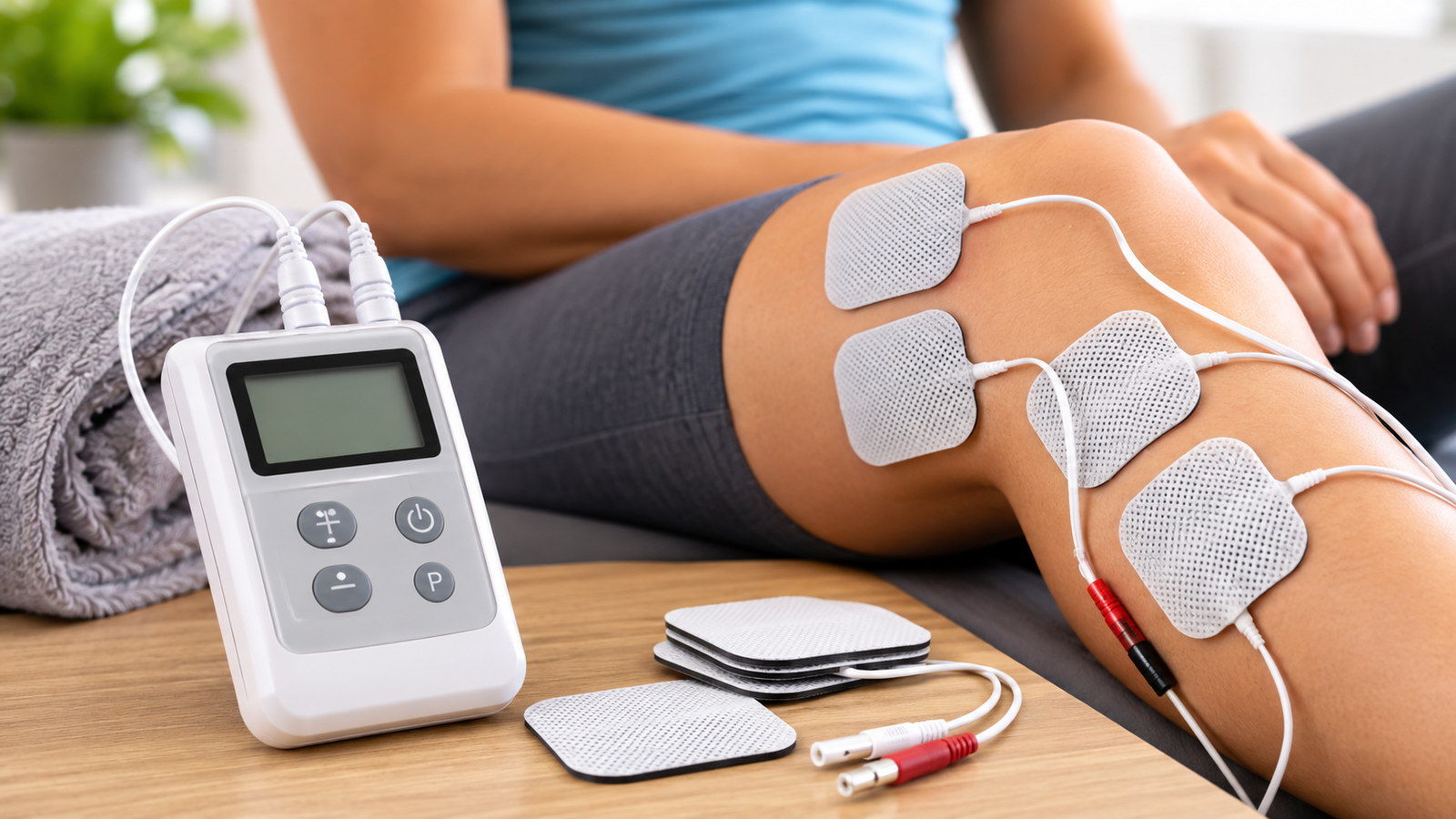

What Are TENS Electrodes?
TENS electrodes are the skin-contact components that connect a TENS stimulation device to the user’s body. They provide a conductive interface through which the electrical current generated by the device passes into the skin.
Most modern electrodes combine several components. These can include a flexible backing or substrate, a conductive layer, an adhesive system, and a conductive hydrogel. Some designs also include lead wires, connectors, or other attachment components.
The U.S. Food and Drug Administration recognizes standards addressing the safety and performance of transcutaneous electrical nerve stimulators, including requirements related to patient leads and electrodes.
Because electrodes have direct skin contact, their design must balance electrical performance with comfort and skin compatibility. FDA guidance for electrode products emphasizes characteristics such as materials, construction, dimensions, biocompatibility, electrical performance, adhesive performance, and shelf life.
How Do TENS Electrodes Work?
A TENS unit generates controlled electrical pulses. The electrodes provide the pathway between the device and the skin, allowing those pulses to reach the targeted area.
TENS is thought to work through several mechanisms, including influencing pain signals transmitted by nerves and encouraging the body’s natural pain-relieving processes. Healthdirect notes that TENS may help reduce pain during or immediately after treatment, although it does not work equally well for everyone.
The electrodes play an important role because electrical stimulation depends on good contact between the electrode and the skin. Poor contact can increase discomfort, create uneven stimulation, or make the treatment less effective.
This is one reason electrode construction matters. Conductive gels deliver comfortable effective stimulation. A properly formulated conductive interface can help distribute electrical current across the contact area while maintaining the necessary connection between the device and skin.
Common Types of TENS Electrodes
There are several electrode configurations available, and the best option depends on the TENS device, intended application, treatment area, and manufacturer’s instructions.
Self-Adhesive Electrodes
Self-adhesive electrodes are among the most convenient options for home TENS use. They typically contain a conductive hydrogel or similar conductive layer combined with an adhesive surface.
The user can place the electrode directly on clean, dry skin without needing separate straps or tape. Once treatment is complete, the electrode can generally be removed and returned to its protective liner for storage if it is designed for reuse.
Reusable Electrodes
Reusable electrodes are designed for multiple applications. Some require a separate conductive gel, while others use a reusable adhesive or hydrogel surface.
Their lifespan depends on factors such as usage frequency, skin preparation, storage conditions, cleaning practices, and the manufacturer’s instructions.
Pre-Gelled Electrodes
Pre-gelled electrodes contain a conductive gel as part of the electrode assembly. This simplifies setup because the user does not have to apply a separate conductive medium.
The gel also contributes to electrical contact and comfort. Electrode-specific conductive gels are designed to optimize current conduction, and improved conduction can sometimes allow the desired stimulation effect at a lower current amplitude.
Carbon or Conductive Rubber Electrodes
Some stimulation systems use carbon-containing or conductive rubber electrodes with a separate conductive gel. These designs may be secured using straps or tape and can be repositioned more easily than some disposable adhesive designs.
The choice between reusable conductive rubber electrodes and self-adhesive electrodes depends on the device and intended application.
Why Electrode Size and Shape Matter
TENS electrodes are available in different shapes and sizes. These differences are not simply cosmetic.
A larger electrode can provide a broader contact area, while a smaller electrode may be more appropriate for a localized treatment area. The electrode shape can also influence how easily it fits around body contours.
Manufacturers must consider the intended stimulation parameters and application when selecting electrode dimensions. FDA guidance recommends specifying electrode type and size and evaluating relevant performance characteristics.
Users should always follow the electrode and TENS unit manufacturer’s instructions instead of selecting electrode dimensions solely based on appearance.
How to Prepare Your Skin for TENS Electrodes
Proper skin preparation can improve electrode contact and help preserve adhesive performance.
Before applying electrodes, the skin should generally be clean and dry. Oils, lotions, sweat, dirt, and other residues can interfere with adhesion and electrical contact.
Avoid applying electrodes over broken, irritated, infected, or numb skin. The NHS specifically advises against using TENS on irritated, broken, infected, or numb areas.
If the electrode does not adhere properly, do not simply increase the stimulation intensity. Instead, turn off the device and check the electrode placement and skin contact according to the manufacturer’s instructions.
Where Should TENS Electrodes Be Placed?
Electrode placement depends on the type and location of pain, the TENS device, and guidance from a healthcare professional.
Electrodes are often positioned around the painful area, but the correct placement is not necessarily directly over the point of pain. Queensland Health guidance advises users to follow placement instructions from their physiotherapist and maintain appropriate spacing between electrodes.
TENS electrodes should not be placed on areas where stimulation may create unnecessary risk. Healthdirect advises against placing TENS electrodes on areas such as the head, chest, front of the neck, near the eyes, or over open wounds, and recommends professional advice for people with certain medical conditions.
Always follow the instructions supplied with the specific TENS device.
How to Get Better Performance From TENS Electrodes
Several simple practices can improve the experience of using TENS electrodes.
First, inspect the electrodes before each use. Look for signs of drying, damage, contamination, or deteriorating adhesive. If an electrode is no longer maintaining good contact, it may be time to replace it.
Second, store reusable adhesive electrodes according to the manufacturer’s instructions. Many products use a protective liner that should be replaced after use to help preserve the adhesive and conductive surface.
Third, avoid touching the adhesive or conductive surface unnecessarily. Oils from the hands can reduce adhesion and shorten the useful life of some electrodes.
Finally, do not use electrodes beyond their recommended service life. As the adhesive or conductive gel deteriorates, contact quality may decline.
When Should TENS Electrodes Be Replaced?
There is no universal replacement schedule because electrode lifespan varies between products.
Common signs that replacement may be appropriate include:
- The electrode no longer sticks securely to clean, dry skin.
- The electrode has become excessively dry.
- Stimulation feels unusually uncomfortable.
- The electrode surface appears damaged.
- The electrode does not provide consistent contact.
- The manufacturer has reached its recommended reuse limit.
Using worn electrodes can result in poor contact and inconsistent stimulation. Replacing them when they no longer perform as intended is an important part of maintaining a TENS system.
Choosing Quality TENS Electrodes
When evaluating tens electrodes, consider more than price. Important characteristics include conductivity, adhesive performance, skin compatibility, electrode dimensions, flexibility, durability, and compatibility with the intended TENS device.
Medical product manufacturers also need to evaluate materials carefully. FDA guidance highlights biocompatibility, electrical performance, adhesive performance, and shelf life as important electrode characteristics.
For companies developing or sourcing medical stimulation products, working with an experienced manufacturer can help simplify material selection, product development, testing, and production considerations.
R & D Medical Products is an example of the type of medical product development partner businesses may consider when exploring specialized healthcare product solutions.
Safety Considerations When Using TENS Electrodes
TENS is generally considered a safe form of pain management when used appropriately, but it is not suitable for everyone.
People with pacemakers or other implanted heart devices, for example, should seek professional advice before using TENS. Healthdirect and the NHS also identify precautions involving epilepsy and pregnancy.
TENS should not be used while driving or operating machinery, and electrodes should not be used in water. Users should also stop treatment and remove the electrodes if they experience significant discomfort or skin irritation.
If you are uncertain about whether TENS is appropriate for your situation, consult a qualified healthcare professional before using the device.
The Importance of Quality in Electrode Manufacturing
The effectiveness and comfort of a TENS system depend partly on the quality of its electrode interface. Manufacturers must consider how different materials interact with electrical current, skin, adhesives, and conductive gels.
A well-designed electrode needs to maintain reliable electrical contact without creating unnecessary irritation. It also needs to remain functional throughout its intended shelf life and usage period.
Regulatory documentation for TENS electrode products can include information about materials such as hydrogel, conductive fiber, carbon conductive film, adhesive, substrate, and liners. FDA-cleared examples demonstrate how these components can be incorporated into a complete electrode assembly.
This highlights why product development should address both electrical and biological considerations rather than focusing exclusively on conductivity.
Final Thoughts
TENS electrodes may look like simple adhesive pads, but they are an important part of a complete electrical stimulation system. Their materials, conductive properties, adhesive performance, size, shape, and condition all influence the user’s experience.
Whether you are a consumer using TENS at home, a clinician helping a patient select suitable accessories, or a company developing medical stimulation products, understanding tens electrodes can help you make more informed decisions.
Good skin preparation, correct placement, appropriate storage, timely replacement, and following the manufacturer’s instructions can help support safe and consistent use. For manufacturers, careful material selection, biocompatibility assessment, electrical testing, and quality control are essential considerations when developing electrode products.
Frequently Asked Questions
What are TENS electrodes used for?
TENS electrodes provide the conductive connection between a TENS device and the user’s skin. They allow controlled electrical stimulation from the device to reach the targeted area.
How long do TENS electrodes last?
The lifespan varies by product. Reusable electrodes may last through multiple applications, while disposable products have a more limited service life. Adhesion, dryness, damage, and manufacturer recommendations are useful indicators for replacement.
Can TENS electrodes be reused?
Some TENS electrodes are specifically designed for reuse, while others are intended for single use. Always follow the manufacturer’s instructions for the specific product.
Why do TENS electrodes stop sticking?
Adhesive performance can decline because of repeated use, skin oils, sweat, dirt, improper storage, or drying of the electrode’s conductive material. Replacing worn electrodes can restore better contact.
Can TENS electrodes irritate the skin?
Yes. Some users may experience redness, itching, or irritation. If irritation develops, stop using the electrodes and consult a healthcare professional if symptoms persist or are significant.
Can I use regular gel with TENS electrodes?
Use only a conductive gel specifically recommended by the TENS device or electrode manufacturer. The appropriate gel is designed to provide suitable electrical conduction and skin contact.
Where should TENS electrodes be placed?
Placement depends on the condition being treated and the device’s instructions. A healthcare professional can provide individualized guidance. Avoid areas where TENS is contraindicated, including broken or irritated skin and other sensitive areas identified in the device instructions.
Are all TENS electrodes compatible with every TENS machine?
No. Electrode connectors, dimensions, electrical characteristics, and intended use can differ. Check compatibility with the TENS device manufacturer before purchasing replacement electrodes.