
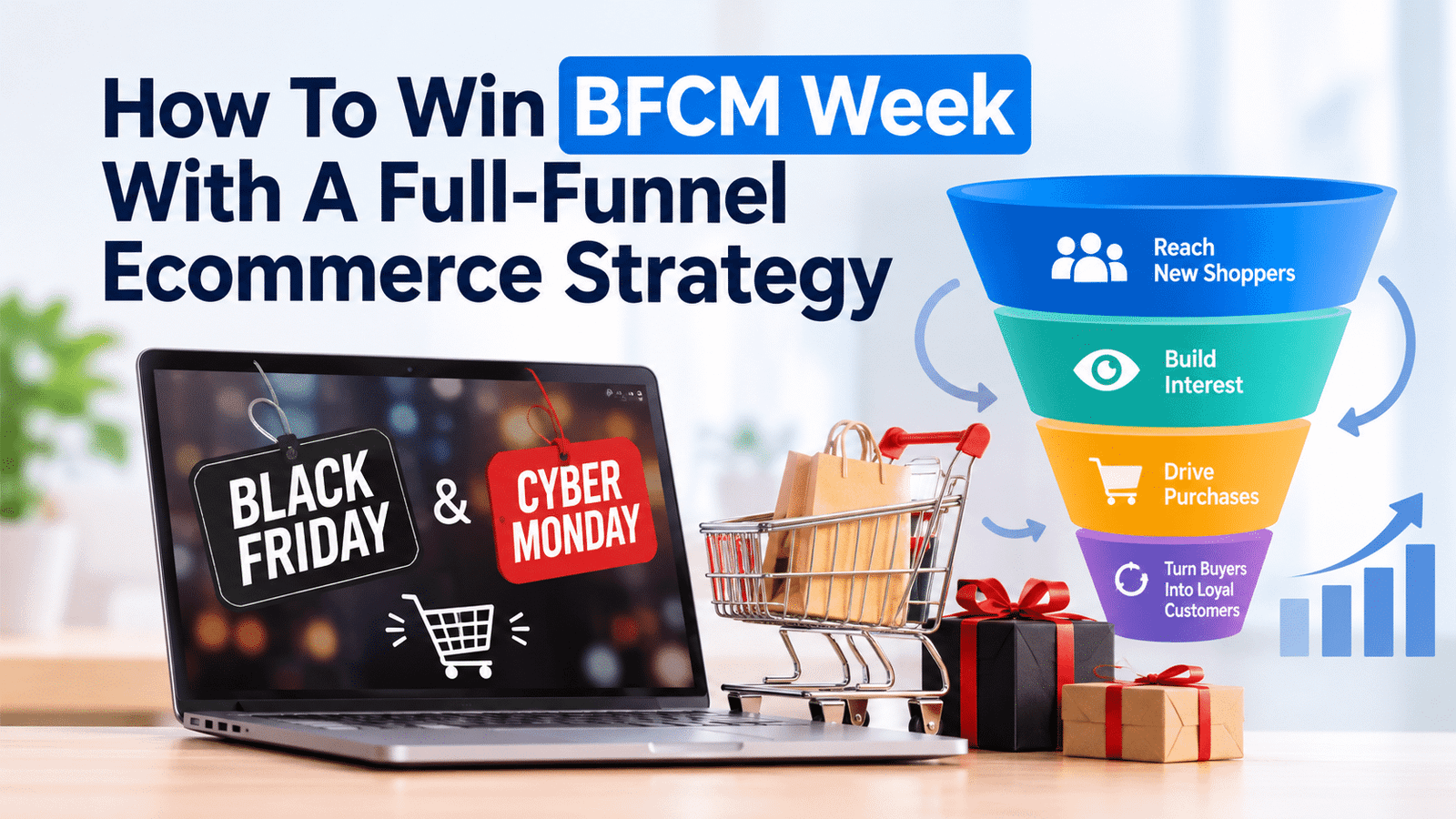

Black Friday and Cyber Monday (BFCM) are among the biggest sales opportunities for ecommerce businesses. In 2026, Black Friday falls on November 27, followed by Cyber Monday on November 30. With shoppers actively comparing products, searching for discounts, and looking for holiday deals, businesses have an opportunity to attract new customers and increase sales.
However, getting good results during BFCM week takes more than increasing advertising budgets or offering bigger discounts. Many shoppers discover products weeks before Black Friday. They visit websites, compare brands, engage with advertisements, and wait for the right offer before making a purchase.
This is why a full-funnel ecommerce strategy matters. Businesses need to attract potential customers before the sale, invest in paid media services to stay connected with interested shoppers during the shopping weekend, and continue converting website visitors after Cyber Monday.
A well-planned BFCM marketing strategy helps businesses use their advertising budgets more effectively while creating opportunities for both immediate sales and long-term customer growth.
Why Your BFCM Strategy Should Start Before Black Friday
Waiting until Black Friday to launch advertising campaigns means entering the competition when many retailers are already fighting for shoppers’ attention.
Starting earlier gives ecommerce businesses time to introduce their products, reach new audiences, and build website traffic. It also creates opportunities to reconnect with visitors who showed interest but were not ready to purchase.
For example, someone might discover your store through a Facebook advertisement in early November, visit a product page, and leave without buying. A few days later, they may see another advertisement or search for the product on Google. When Black Friday arrives, they already recognize your brand and may be more likely to consider your offer.
The goal is to build that familiarity before shopping activity reaches its peak. Instead of treating BFCM as a four-day sales event, businesses should plan their marketing around the entire holiday shopping period.
Build Demand Before BFCM Week
Your advertising campaigns should start reaching potential customers well before Black Friday. Early November is a good time to introduce products, test promotional messages, and build audiences for future advertising.
Increase Meta Advertising Budgets Gradually
Facebook and Instagram advertising can help ecommerce businesses reach people who have not purchased from their stores before. These prospecting campaigns introduce products to new audiences and help generate interest ahead of the holiday shopping season.
However, increasing budgets too quickly or making frequent campaign changes can affect performance. Meta’s learning phase generally requires around 50 optimization events within seven days after a significant edit. Major changes can also cause campaigns to re-enter learning.
Rather than making sudden budget increases, gradually increase spending on campaigns that are already performing well. This gives campaigns time to adjust before competition becomes stronger.
The aim is to enter Black Friday with established audiences and campaigns that have enough budget to handle increased demand.
Prepare Holiday Advertisements Early
Do not wait until the week of Black Friday to create your promotional advertisements. Prepare different creative versions in advance so you have enough time to review messaging, test designs, and resolve approval issues.
Product demonstrations, customer reviews, lifestyle images, and short videos can help shoppers understand what makes your products worth considering.
Google also recommends uploading new holiday asset groups at least two weeks before a promotion so they have time to be reviewed and approved. You can then schedule approved assets to appear when your offers become available.
Preparing creatives early also makes it easier to keep your advertising consistent across different platforms.
Finalize Your Offers and Check Product Feeds
Before launching BFCM campaigns, decide which products will be discounted and how the offers will work. Your advertisements, product listings, and website should communicate the same prices and promotional conditions.
If you use Google Merchant Center, check that your product feed contains the correct sale prices. Use the sale_price attribute instead of replacing the original price. This allows eligible products to display their regular and discounted prices in Google Shopping.
Also, verify that the sale price matches the landing page and checkout. Add the correct promotional dates and time zone, and submit promotions early enough for Google’s review.
These checks help prevent pricing errors and product listing issues when shoppers are actively looking for deals.
Capture More Sales During BFCM Week
Once Black Friday arrives, your focus should shift toward capturing the demand generated by your earlier campaigns.
Shoppers are actively searching for products, comparing offers, and revisiting brands they discovered before the sale. Your campaigns need enough budget and accurate information to reach them when they are ready to purchase.
Give Google Ads Campaigns Enough Budget
A campaign that performs well during an ordinary November week may struggle when shopping activity increases.
Google Ads campaigns can spend up to twice their average daily budget on a particular day, subject to a monthly spending limit of 30.4 times the average daily budget. This means campaigns may spend more than expected on Black Friday. Effective Google Ads management helps businesses monitor campaign performance and manage advertising budgets during high-demand shopping periods.
Review Google’s budget recommendations before the sale and identify campaigns that could become limited by budget. Give priority to campaigns that consistently generate valuable sales, particularly those targeting high-intent product and brand searches.
Avoid spending too much before Black Friday, as you need sufficient budget available for the busiest shopping days.
Adjust Bidding for Short Promotional Events
Black Friday discounts can change how shoppers behave. People who were previously comparing products may become more likely to purchase once a special offer becomes available.
Google Smart Bidding already accounts for seasonal patterns, but seasonality adjustments can provide additional information about expected conversion rate changes during short promotional periods.
Google recommends considering these adjustments when conversion rates are expected to change by more than 30% over a period of less than seven days. They are intended for campaigns with existing conversion history.
Use your previous promotional performance to estimate the expected change rather than choosing an arbitrary adjustment. For longer promotions or smaller changes, adjusting ROAS targets manually may be more appropriate.
Remember to review your bidding settings after the promotion ends so campaigns do not continue operating with targets designed for unusually high shopping activity.
Balance Prospecting and Conversion Campaigns
During BFCM week, remarketing and branded search campaigns may generate more immediate purchases than prospecting campaigns. This can make new customer acquisition appear less effective in advertising reports.
However, stopping prospecting completely can limit future opportunities. Some shoppers need more time to compare products before making a purchase, and people discovering your brand during Black Friday may return in December.
Keep prospecting campaigns active at a reasonable budget while directing additional spending toward campaigns that are successfully capturing existing demand.
Review campaign performance regularly and consider the role each campaign plays in generating sales. Looking only at immediate conversions can make you overlook the value of advertisements that introduce new customers to your business.
Turn BFCM Website Visitors Into December Sales
Your marketing efforts should not stop when Cyber Monday ends. Many people who visited your website during BFCM may still be interested in your products but did not complete a purchase.
December provides another opportunity to reconnect with these shoppers through relevant advertising and follow-up campaigns.
Retarget Visitors Who Did Not Purchase
Website visitors who viewed products or added items to their carts during BFCM are valuable audiences for remarketing.
Instead of immediately offering another discount, consider what might encourage them to return. Product recommendations, customer reviews, holiday gift suggestions, and shipping deadlines can all provide useful reasons to revisit your store.
AimLogic’s VisitorLogic helps businesses understand website visitor activity and identify opportunities to reconnect with visitors. According to AimLogic’s website, its solution provides visitor insights and supports targeted re-engagement through marketing channels such as email and social media advertising.
This information can help businesses make their follow-up campaigns more relevant instead of repeatedly showing the same advertisement to every visitor.
Reach Customers Who Are Considering Competitor Products
Some shoppers may have visited competing ecommerce websites while comparing products. Reaching these audiences can create another opportunity to introduce your brand.
AimLogic’s CompetitorLogic uses proprietary targeting technology to reach people who have visited competitor websites. Its Website URL Targeting approach can support campaigns through display advertising, social media, and retargeting.
For ecommerce businesses competing in crowded product categories, this provides another way to reach potential customers who are already exploring similar products.
Review Your Campaigns After The Sale
When promotional pricing ends, conversion rates may return to their usual levels. Review your advertising budgets and bidding targets, and make appropriate adjustments based on your pre-BFCM performance.
Remove expired promotions, update sale prices, and replace advertisements that still contain Black Friday messaging. Also, check whether any countdown offers or limited-time promotions are still running.
Most importantly, evaluate which campaigns brought in new customers, which channels contributed to purchases, and whether customers returned after their first order.
This information can help you improve future campaigns and make better decisions about customer acquisition and retention.
Measure What Worked Across Your Ecommerce Campaigns
Revenue and return on ad spend (ROAS) are important BFCM metrics, but they do not tell the whole story.
Businesses should also understand how their advertising performed before, during, and after the sale. Review impressions, reach, click-through rates, website traffic, conversion rates, cost per acquisition, and average order value.
Pay attention to new customer acquisition as well. A campaign that generated fewer immediate purchases may still have introduced your brand to shoppers who converted later through another channel.
AimLogic’s performance marketing approach focuses on measurable outcomes, campaign tracking, audience targeting, and ongoing optimization. Its website also highlights tracking website traffic, leads, conversions, and return on investment as important ways to evaluate marketing performance.
Reviewing these results helps identify which campaigns deserve more attention and where advertising budgets can be used more effectively.
Frequently Asked Questions
1. When should ecommerce businesses start preparing for BFCM?
Businesses should ideally begin preparing in early November or earlier. This provides enough time to increase advertising budgets gradually, prepare promotional creatives, check product feeds, build remarketing audiences, and test conversion tracking before Black Friday.
2. Should I stop prospecting campaigns during Black Friday week?
Not necessarily. Prospecting campaigns continue introducing your products to new audiences, even if those shoppers do not purchase immediately. Keep these campaigns active while allocating additional budget to campaigns that are generating high-intent traffic and sales.
3. How can remarketing improve BFCM sales?
Remarketing helps ecommerce businesses reconnect with people who previously visited their websites or interacted with advertisements. Showing relevant products, customer reviews, and promotional information can encourage interested shoppers to return and complete their purchases.
4. How does VisitorLogic help ecommerce businesses?
VisitorLogic is an AimLogic solution that provides insights into website visitors, their interactions, and where they leave. Businesses can use these insights to support targeted re-engagement through email, social media advertising, and other marketing channels.
5. Why is campaign tracking important during BFCM?
Campaign tracking helps businesses understand which advertisements, audiences, and marketing channels contribute to website traffic, leads, and sales. It also helps identify performance issues and opportunities to improve advertising budgets and return on investment.
Final Thoughts
Winning BFCM week is not simply about offering bigger discounts or spending more on advertisements. It requires preparation, relevant audience targeting, careful budget management, and consistent follow-up with interested shoppers.
Start building awareness before Black Friday, make sure your advertising campaigns are ready for increased demand, and continue reaching website visitors after Cyber Monday. This approach gives your business more opportunities to attract new customers and generate sales throughout the holiday shopping season.
At AimLogic, we provide performance marketing, SEO, audience targeting, and lead generation solutions designed around business goals. Our solutions, including VisitorLogic and CompetitorLogic, help businesses gain audience insights and reach potential customers through targeted marketing.
If you are preparing your ecommerce marketing campaigns for BFCM, contact AimLogic to discuss how a data-driven marketing strategy can support your customer acquisition and growth goals.