
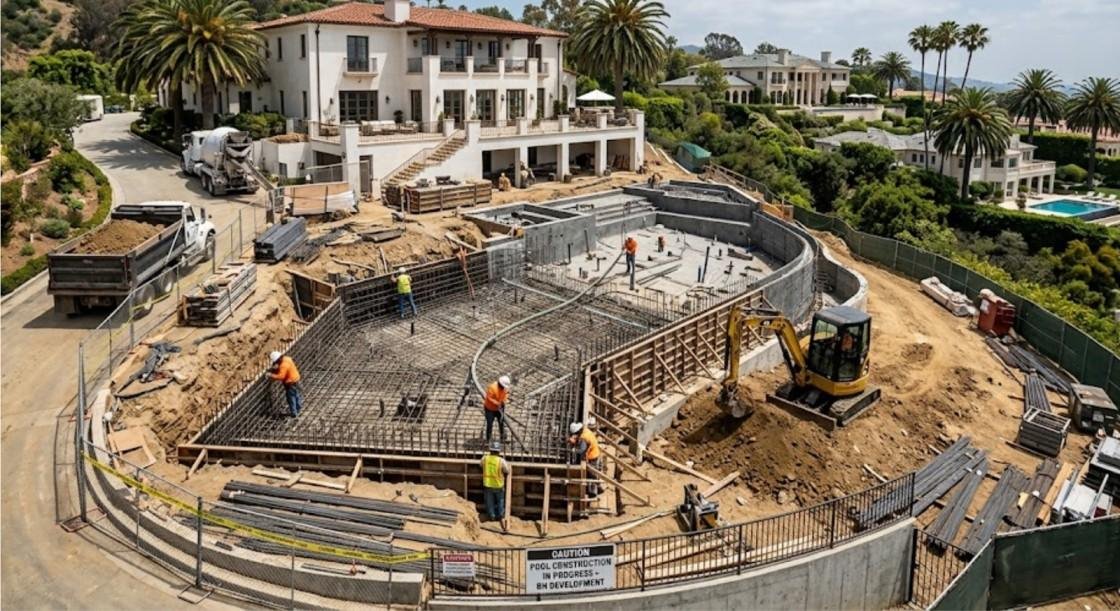

Adding a custom swimming pool to a Beverly Hills residence is one of the most impactful ways to elevate your property’s value, aesthetic grandeur, and outdoor lifestyle. In a city where residential architecture is celebrated on a global stage, a swimming pool is rarely just a standard basin of water. It is an architectural masterpiece whether it is a cantilevered infinity edge jutting out over a canyon, a mirror-edge perimeter overflow seamlessly blending into a limestone patio, or a subterranean wellness retreat equipped with cold plunges and hydrotherapy spas.
However, when homeowners begin the exciting journey of planning their private aquatic oasis, the single most common question they ask is: How long will the construction process actually take?
In general, constructing a custom luxury swimming pool in Beverly Hills takes anywhere from 6 to 12 months from the initial design consultation to the final water start-up. Complex hillside estates requiring advanced structural engineering, caissons, and extensive retaining walls can extend from 12 to 18 months. Because no two luxury properties are identical, understanding the distinct phases of construction is essential for realistic timeline planning. A trusted pool builders in Beverly Hills can guide homeowners through design choices, materials, and engineering requirements that elevate the overall project.
Here is a comprehensive, step-by-step breakdown of the swimming pool construction timeline in Beverly Hills and the unique local factors that influence the schedule.
1. Design, Engineering, and Permitting (2 to 4 Months)
Long before heavy machinery arrives on your property, a rigorous administrative and structural design phase must occur. In Beverly Hills, this stage is particularly thorough due to stringent municipal building codes, seismic regulations, and strict hillside zoning ordinances.
- Architectural Conceptualization (2 to 4 Weeks): Homeowners collaborate with designers and landscape architects to finalize pool geometry, depth profiles, custom water features, and premium finish materials (such as imported glass tiles or basalt pebble aggregates).
- Geotechnical & Structural Engineering (3 to 6 Weeks): If your home is located north of Sunset Boulevard in the canyons or hillsides, a geotechnical soil report is mandatory. Engineers must analyze soil stability and design structural blueprints that may include deep reinforced concrete caissons or grade beams to anchor the pool safely into bedrock.
- City Permitting & Architectural Review (4 to 8+ Weeks): Plans must be submitted to the City of Beverly Hills Community Development Department. Depending on the scope of the project and whether variances or neighborhood architectural review boards are involved, securing final building, electrical, and plumbing permits can take several weeks or months.
2. Site Excavation and Heavy Earthwork (2 to 4 Weeks)
Once permits are in hand, the physical transformation begins. The excavation timeline depends heavily on the accessibility of your backyard and the underlying geological conditions of your lot.
For flat properties in the Beverly Hills Flats with wide side-yard access, standard earth-moving equipment can excavate a pool basin in just a few days. However, for hillside estates or properties with narrow access, contractors must frequently utilize specialized micro-excavators, conveyor belts, or even overhead cranes to remove soil without damaging existing landscaping or architectural structures. If excavators encounter dense bedrock, underground boulders, or high groundwater tables, specialized removal techniques will be required, adding extra days or weeks to this phase.
3. Structural Steel, Plumbing, and Gunite (4 to 6 Weeks)
Once the hole is excavated and shaped, the pool’s structural skeleton is meticulously assembled. This phase transforms raw earth into an engineered, high-tensile vessel built to withstand California’s seismic activity.
[ Excavation & Framing ] ---> [ Steel Rebar Grid ] ---> [ High-Pressure Gunite Application ] ---> [ 28-Day Water Curing ]
- Rebar Grid Installation (1 to 2 Weeks): A dense grid of high-grade steel rebar is hand-tied and contoured to the exact shape of your pool, spa, and Baja shelves.
- Plumbing & Electrical Stub-Outs (1 to 2 Weeks): Master plumbers and electricians install main drains, skimmers, return lines, automated pool cover vaults, LED lighting niches, and high-voltage wiring for dual-fuel heating systems.
- Gunite / Shotcrete Application (1 to 2 Days): A specialized crew applies a high-pressure concrete slurry (gunite or shotcrete) over the steel rebar cage, forming the thick, monolithic shell of your swimming pool.
- The Mandatory Curing Period (28 Days): To achieve its maximum compressive strength and prevent future structural cracking, the concrete shell must cure slowly over a 28-day window. During this time, homeowners or construction crews must wet down the concrete daily with water.
4. Tile, Coping, and Hardscaping (4 to 8 Weeks)
After the concrete shell has fully cured, the aesthetic personality of your luxury pool truly begins to take shape. This is often the most visually rewarding phase for homeowners, as highly skilled artisans and masons arrive on site to apply premium finish materials.
Coping stones whether hand-carved limestone, flamed granite, or modern architectural pre-cast concrete are carefully leveled and set around the perimeter. Simultaneously, tile setters painstakingly apply waterline tiles, submerged step accents, or full-glass mosaic interiors. If your project includes broader backyard improvements, such as outdoor kitchens, sunken fire pits, or travertine patio decking, that hardscape construction occurs concurrently during this timeframe.
5. Equipment Installation and Smart Automation (1 to 2 Weeks)
While masons finalize the decking, mechanical technicians assemble the “brain and lungs” of your pool system. Today’s Beverly Hills homeowners demand whisper-quiet, energy-efficient, and fully automated mechanical equipment vaults.
Technicians install variable-speed filtration pumps, high-capacity commercial heaters, secondary sanitation systems (such as UV-C sterilization or ozone generators), and automated chemical dosing units. The system is then integrated into a smart home automation ecosystem (such as Crestron, Control4, or Lutron), enabling the homeowner to heat the spa, activate laminar water jets, and alter LED lighting themes remotely from a smartphone or tablet.
6. Interior Plaster, Water Fill, and Start-Up (2 to 3 Weeks)
The final step in the construction process is applying the interior waterproof coating. Depending on your design preference, this may involve a silky-smooth polished marble plaster, a durable quartz aggregate, or a dark, reflective pebble finish that mimics a natural pond.
Once the plaster is troweled and smoothed, the fill hoses are turned on immediately. A pool must be filled continuously without stopping to prevent unsightly waterline rings from forming on the fresh plaster. Once filled, a specialized start-up technician balances the water chemistry carefully managing pH, alkalinity, and calcium hardness levels and brushes the interior daily over a two-week curing window to guarantee a pristine, durable, and radiant swimming environment.
Technical Timeline Summary: Custom Beverly Hills Pools
| Construction Phase | Estimated Duration | Key Dependencies & Potential Bottlenecks |
| 1. Design & Permitting | 2 to 4 Months | Hillside engineering reports, HOA approvals, and city permit processing speeds. |
| 2. Excavation & Earthwork | 2 to 4 Weeks | Lot accessibility, narrow equipment access lanes, and subterranean bedrock. |
| 3. Steel, Plumbing & Gunite | 4 to 6 Weeks | Includes the mandatory 28-day concrete structural curing window. |
| 4. Tile, Coping & Hardscape | 4 to 8 Weeks | Availability of imported materials and complexity of custom stone masonry. |
| 5. Equipment & Automation | 1 to 2 Weeks | Integration with existing home electrical grids and smart automation hubs. |
| 6. Plaster & Water Start-Up | 2 to 3 Weeks | Continuous water filling and 14-day chemical calibration period. |
| Total Estimated Timeline | 6 to 12 Months | Hillside cantilevered pools or complex estates may extend to 12–18 months. |
Conclusion: Investing in Timeless Craftsmanship
Building a custom swimming pool in Beverly Hills is a significant undertaking that requires careful planning, patience, and uncompromising structural discipline. While the timeline may seem extensive, rushing the engineering, curing, or permitting phases can compromise the structural integrity and aesthetic perfection of your investment.
By collaborating with an experienced, highly reputable local pool builder who intimately understands the unique topographical, legal, and architectural requirements of Beverly Hills, you ensure a smooth, transparent construction journey. The end result is not just a pool, but a breathtaking, enduring personal sanctuary that elevates your daily lifestyle for decades to come.
Frequently Asked Questions (FAQ)
Q: Can swimming pool construction take place during the rainy winter months in Southern California?
A: Yes, pool construction occurs year-round in Beverly Hills. While heavy winter rainfall can temporarily pause open earthwork or excavation to prevent soil erosion, winter and early spring are actually ideal times to start a project. Concrete and plaster cure exceptionally well in mild, cooler temperatures, and starting in winter ensures your luxury pool is completely finished and ready for entertaining by summer.
Q: How much does building a custom luxury swimming pool cost in Beverly Hills?
A: Costs vary dramatically based on size, hillside engineering, and material selection. Standard custom pools on flat lots typically begin between $150,000 and $250,000. For complex hillside infinity pools requiring deep caissons, retaining walls, automated hidden covers, and imported glass tile interiors, budgets frequently range from $350,000 to well over $1,000,000.
Q: Do I need a special permit to install a pool heater or smart automation system in Beverly Hills?
A: Yes. The City of Beverly Hills enforces strict compliance with California’s Title 24 energy efficiency standards. Your pool contractor must pull specific electrical and mechanical permits for heating equipment, variable-speed pumps, and automated systems to verify that the installation meets municipal environmental and safety codes.